COUNTDOWN TO 150 -- Kansas on the World Stage by Earl Shreckengast
Kansas on the world stage at Centennial
Kansas proudly claimed its place on the national and world stage at the 1876 Centennial Exposition. Held in Philadelphia, the Exposition was a world’s fair to celebrate the 100th anniversary of the signing of the Declaration of Independence and to showcase the industrial, artistic, and scientific progress of the United States. Of the 38 states in 1876, Kansas was one of 21 to participate in the Exposition. It joined forces with the territory of Colorado to have an exhibition hall to raise their profiles.
Kansas and Colorado presented two very different but complementary visions of the American West at the Exposition. Kansas emphasized agriculture, natural resources, and settlement potential, while Colorado highlighted mineral wealth and dramatic wildlife. Kansas used its displays to counteract negative publicity about the recent drought and grasshopper plague and to promote the state as prosperous, fertile, and ready for new settlers.
Charles F. Koester and his colleagues on the Kansas Centennial Board of Managers were responsible for assembling and organizing Kansas’ exhibits at the Kansas and Colorado Building. Their’s were not honorific positions.
Charles solicited agricultural and manufactured goods from Nemaha, Marshall, and Washington counties for the fair. He went to Topeka to help to pack the four rail carloads of specimens from throughout Kansas that were shipped to Philadelphia. He and four colleagues, under the creative guidance of Professor Henry Worrall of Topeka, arranged the specimens for display. Charles was also responsible for the grounds around the exhibit building.
Kansas and Colorado presented one of the most admired and talked-about displays at the fair. The building was laid out like a Maltese cross with four radiating arms around a central hall. Colorado occupied one quarter of the building. The Atchison, Topeka, and Santa Fe Railroad, which helped with the building’s funding, was also there.
There was a 14-foot-tall bronze fountain with a circumference of 37 feet under the dome of the central hall. It had four tiers of basins that were like large circular shells. The stem of the fountain was ornamented with swan’s beaks and wreaths. There were six vases around the bottom basin that held plants. The fountain threw a jet of water ten feet high.
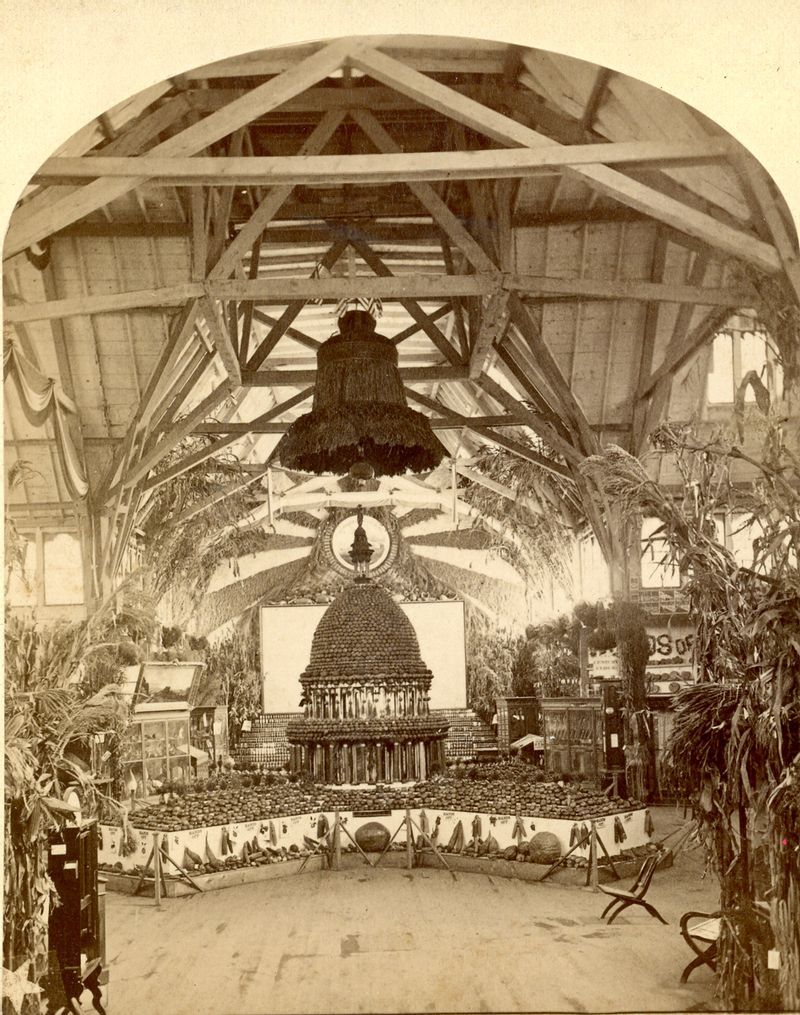
Suspended above the fountain was an attention-grabbing replica of the Liberty Bell. It was made from wheat, oats, millet, and broomcorn. It was eight feet and nine inches across at the mouth. The stem and clapper of the bell were made of gourds. It even had the crack of the actual Liberty Bell which was represented by the dark tips of sorghum resting on the light-yellow body of wheat and oats.
Surrounding these features and filling the Kansas wing were elaborate symbolic arrangements. Corn, wheat, millet, sorghum, flax, and other crops were arranged into arches, pillars, and other decorative motifs. One display featured elk horns filled with millet and flax, antelope heads holding wheat, and columns made of corn stalks.
There were geological and natural history specimens. To showcase Kansas’s small but ambitious industrial experiments, there were silkworm cocoons and silk ribbons from the Silkville commune in Franklin County.
A comfortable reading room offered 150 Kansas newspapers, many containing local histories printed specifically for July 4, 1876. Eastern visitors were especially fascinated by the large tumbleweeds on display.
The efforts of the Kansas exhibition organizers to bring favorable notice for Kansas paid dividends. The Philadelphia Times called it “the best special State display at the Exhibition” and praised the “ingenious and tasteful” arrangements. The New York Herald noted that Kansas had “outdone older states in artistic display.” A reporter for the Weekly Commonwealth of Topeka, Kansas, commented, “The more I see of the Kansas and Colorado building, the better I like it. There are dozens of other State buildings on the ground, many of them more elaborate and costly, but none, I think, more in appearance or more admirably arranged.”
Some of the Kansas displays had a life after the closing of the Centennial Exposition. P. T. Barnum of circus fame acquired some of the Kansas displays which he used during his European tour. In so doing, he brought Kansas to an international audience.
Above is a stereoscopic picture of the interior of the Kansas and Colorado Building at the 1876 Centennial. The much-talked-about replica of the Liberty Bell hangs from the ceiling.
COUNTDOWN TO 150 --Charles & Sylvia Marry by Earl Shreck... “Wake up at 4 ½ o’clock A.M. the morning Cool very Beautiful and Bright Sunshine. Sky clear, early; (Sister) “Jane” (Schmidt) Congratula...
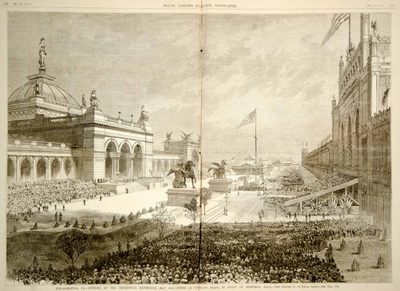
May 19, 2026 -- Nation Celebrates Centennial by Earl Shr... COUNTDOWN TO 150---Nation Celebrates Centennial with a World’s Fair In 1876, national and international attention focused on West Philad...
May 12, 2026 Blog by Earl Shreckengast - Koester at Cent... COUNTDOWN TO 150---Charles Koester at Centennial Exposition Marysville, Marshall County, and Kansas were represented at our country’s 10...
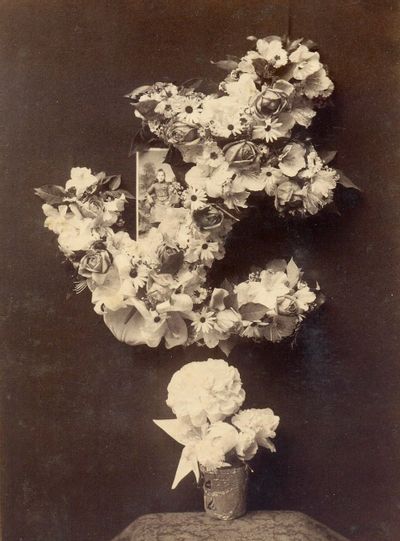
FLOWERS AT SYLVIA KOESTER'S FUNERAL by Earl ShreckengastThe funeral of Sylvia Broughten Koester was abundant with flowers and rich in Victorian symbolism. Sylvia, the wife of Charles F. Koeste...
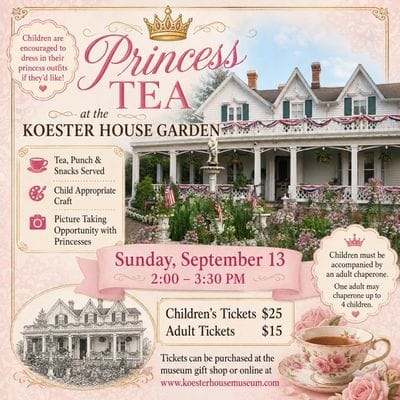
Princess Tea --SOLD OUT -- TICKETS NO LONGER AVAILABLE Read More
Sep 13, 2026
2:00 PM CDT
919 Broadway Street
Marysville, KS 66508