IF THIS HOUSE COULD TALK -- Blog Post # 26 -- Connected to the outside world
Trains enabled Charles and the family to travel away from Marysville.
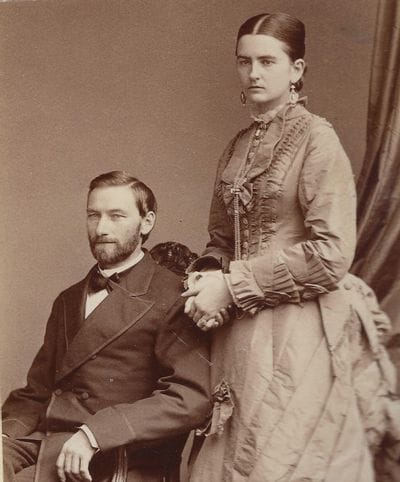
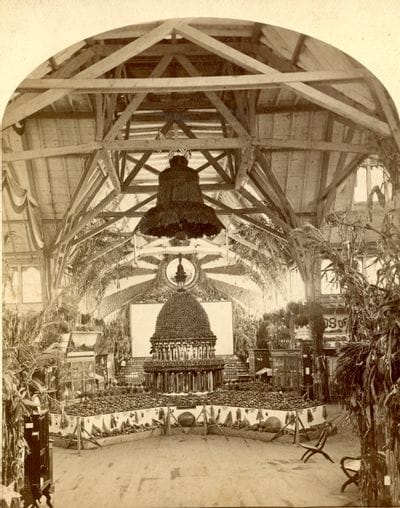
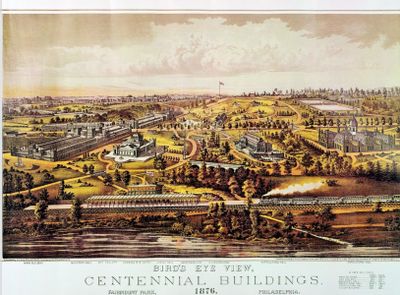
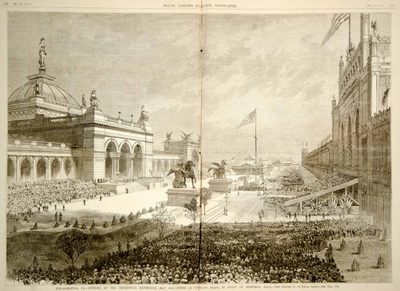
Rail travel was a part of milestone events in their lives. Charles and his bride, Sylvia, took trains in 1876 for their honeymoon trip to Philadelphia to visit the Centennial Exposition. They traveled to and from St. Joe when they sought treatment for Sylvia’s consumption. Charles and his 11-year-old son Charlie traveled to Chicago in 1892 to get treatment at Rush Medical College for Charles’ eye problems.
In 1899, Charlie took the train to Quincy, Illinois to attend Gem City Business College. The family went with him to St. Joe; his friends brought him keepsakes and rode the train as far as Axtell with him.
Farther afield, Tinnie and Jennie shopped for dresses and hats in St. Joe and Kansas City. When Tinnie and Jennie were older teens, they went with Charles to Kansas City for a weekend trip. They attended a festival and saw a play and an opera. On another occasion in 1900, they saw Christmas displays in Kansas City, shopped at Emory Bird Thayer, and after supper, attended “La Boheme.”
The Koesters were fortunate to be able to travel by train. The tickets for Charles and Charlie to go to Chicago for Charles’ eye treatment in 1892 cost $20.65. In today’s dollars, it would be $686.58.
To put the train fare into perspective, Charles went to Lincoln Park for lunch when he was in Chicago. He ate soup, veal, potatoes, peas, rusks, butter, ice cream and tea—all of 45 cents. His lunch would be $15.52 in 2025 dollars.
Given the frequency of his train travel, Charles usually bought an annual pass on the St. Joseph and Grand Island Railroad.
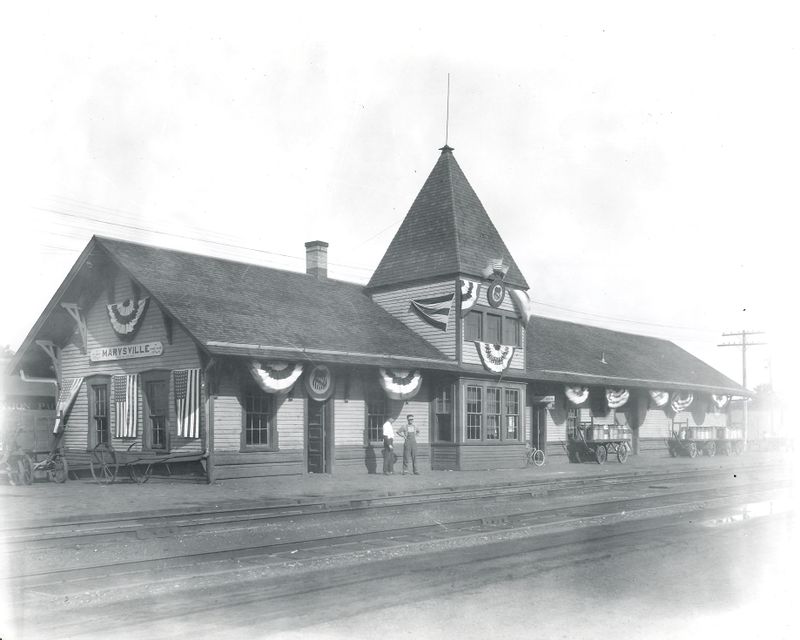
Pictured above is Marysville’s St. Joe and Grand Island depot. Charles and his family started and ended many of their travels at this depot which was built in 1880.